“In theory, theory and practice are the same, in practice, they are not.” – unknown theorist.
Theory of Cure
An illness consists of a set of present causes and the negative consequence of those causes.
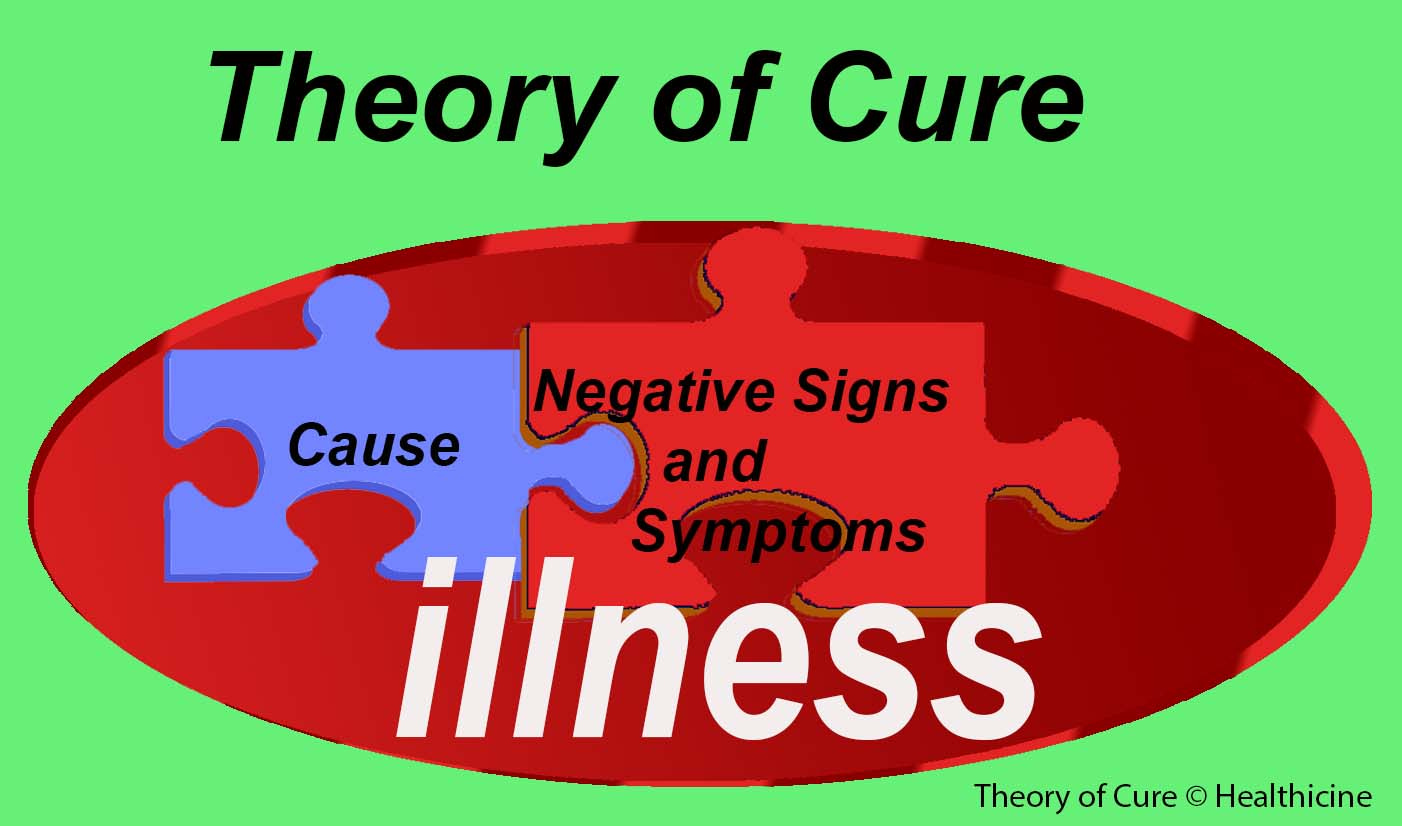
An illness element consists of a single present cause and the negative consequences of that cause.
A cure is an action, or a set of actions, that addresses the causes of an illness, producing a cured state or status such that the negative consequences are no longer present.
Cured is the status of the illness after the cause(s) of an illness have been successfully addressed. The individual, the patient, is not cured. The illness is cured. It was present due to the intersection of cause and negative consequences. Now that the cause has been addressed, it is no longer present.
Cured
In the theory of cure, an element of illness is cured when its cause has been successfully addressed.
A compound illness has multiple present causes such that each cause must be addressed to produce a completely cured status. If an illness, seen as having multiple causes, is cured by addressing a single cause, it was an elementary illness.
A complex illness is present when one illness is causing another illness. Both the primary and the secondary illnesses must be cured for a complete cure. Often, curing the primary illness facilitates a healing or caring cure of the secondary.
Damage or injuries caused by the illness are independent illness elements, indicating a complex illness, which require multiple independent cure actions. Sometimes we cure the damage first and later address the cause – sometimes the reverse, sometimes we act to address both causes at once. Damage is often healed without conscious intent.
Cured takes time. Partially cured and temporary cured are not only possible, they are commonplace, as many causes of illness can only be addressed in stages.
There are three fundamental types of cures:
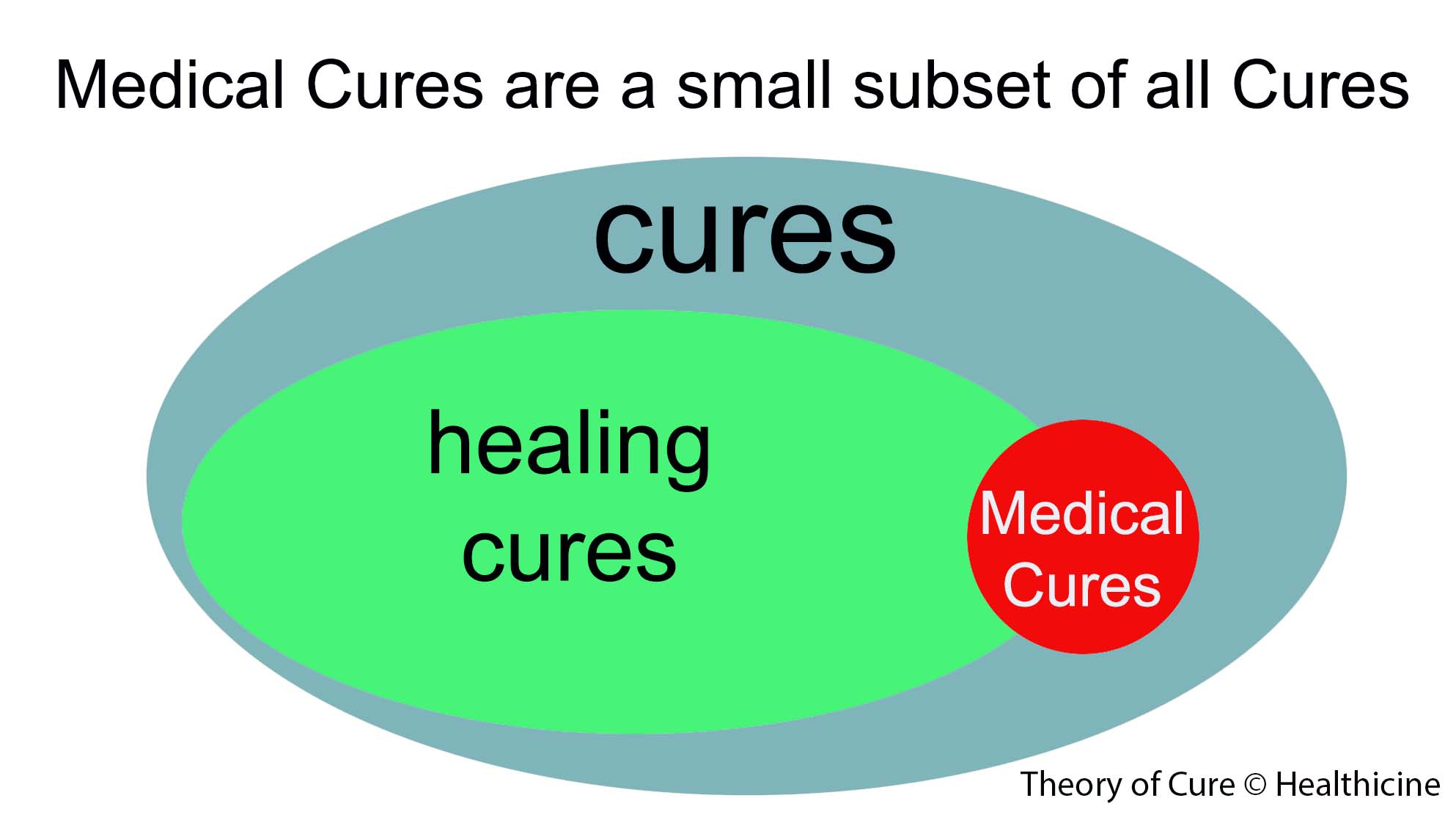
Healing cures are natural and occur without conscious attention, although they are often facilitated or aided by conscious actions. Healing is the first cure, present in all live entities, a part of development and growth, essential to survival and health.
Caring cures come from intentional actions by self and others, to improve healthiness, often without intentions to cure.
Intentional cures, both medical and non-medical, are a result of actions that intentionally address causes of illness.
Curative actions that are conscious and those that are unconscious can cause independent illnesses. These illnesses are often dismissed as “side effects.”
Illness, Disease, Sickness
Illness, sickness, and disease are independent terms.
Illness: In the theory of cure, illness is the condition to be cured, the condition the individual is suffering from, consisting of the cause and it’s negative consequences. Most cases of illness are minor, easily cured.
Disease: is a medical view. Diseases are defined by medical practitioners and medical systems. Disease statistics are compiled by diagnosis
Modern medicine aims to “treat” diseases and makes no effort to track cases of disease cured statistically or scientifically. Most cases of illness are never diagnosed medically and their cured status cannot be tracked.
Sickness: is a community view. A community, or individuals in a community not only view illness and disease differently, they might identify illnesses where the patient feels no illness and no diagnosis is present. Sickness, and thus sickness cured is generally not a useful or scientific concept.
Cured: In Practice
Most cases of illness are elementary, having single causes and simple cures. Most cases of illness are cured easily, often without conscious awareness, although some cures take longer than others – especially healing of injuries.
Cured: In Modern Medical Practice
Most cases of cured are ignored. They do not require medical attention. This can be unfortunate, because it can distract us from causes and cures in minor cases, creating a failure to understand more difficult cured cases
.
Today, no modern medical system tracks cured cases of any illness or disease. No doctor, clinic, hospital, medical center or system, and no insurance company or industry tracks cured cases. Treatments and “success or failure” are tracked by practitioners in some cases, but are often poorly tracked or simply ignored. No medical insurance system pays for cured cases, much less paying attention to the quality and safety or risks of the cure.
What Means Cured?
In theory most cases of illness are easily cured, and most cases are cured.
In practice, most cases of illness are cured without medical attention.
In medical practice, most cases of illness can be considered incurable – because they cannot be cured by medicines or medical treatments. As a result “there is no cure for the common cold… (minor cuts and bruises, influenza, food poisoning, mumps, measles, COVID…)” – even though most cases are cured without difficulty.
Modern medicine generally avoids the word cured. The word cured has no medical nor scientific meaning in most cases of disease.
to your health, tracy
Author: A New Theory of Cure