Why We Can’t Cure

IMG_2862Do you have an illness that can’t be cured? Do you have arthritis, Parkinson’s, or asthma? Diseases for which there is no cure. Do you have a cancer – and you are hoping for a ‘remission’ due to treatments of chemotherapy, radiation and surgery, which even the doctors agree do not ‘cure’ cancers? Do you have a chronic headache, or any other chronic condition? Chronic diseases, by definition, cannot be cured. Why can’t we cure some illnesses? Why does the word “cure” not appear in many medical dictionaries and references? 

When I researched the top 10 best selling drugs of 2011 – none of them claimed to ‘cure’ the disease.  Of the top 10 best selling drugs in 2008, none were promoted as a ‘cure’ for a disease.  I recently did a follow-up study of the top 100 best selling medicines of 2013. Of the top 70 best selling medicines in 2013, none cured the disease they were designed to treat. Of 100 medicines, only 3 actually cure the disease being treated, and only 5 attempt to cure the disease being treated. Those three medicines are all antibiotics.  Why do most medicines not cure? Why are the best selling medicines designed to ‘not cure’? Continue reading

Facebooktwitterredditpinterestlinkedinmail
Posted in Uncategorized | 1 Comment

Placebo Paradoxes

When you research medicines, alternative medicines, even medical treatments that do not involve a physical substance, you will see reference to the “placebo effect”. Statements like:

X is no better than a placebo.
Y is probably just a “placebo effect“.
Treatment X is just a placebo.
Medicine X failed to beat a placebo in controlled clinical studies.

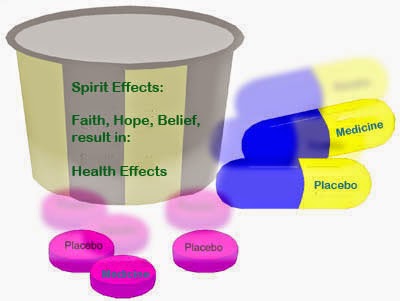
What is a placebo? What is a placebo effect? Are they real, fake, or something else? Is the placebo effect magic?  No, but placebo effects are a paradox. Merriam Webster defines placebo effect thus:

improvement in the condition of a patient that occurs in response to treatment but cannot be considered due to the specific treatment used

Placebo effect is a real effect in response to a treatment that cannot cause the effect.

A paradox. Continue reading

Facebooktwitterredditpinterestlinkedinmail
Posted in Uncategorized | Comments Off on Placebo Paradoxes

10 Reasons to Love your Homeopath

Lots of people swear by homeopathic medicines, but a small group thinks they should be banned. In the book “Think Like a Freak”, authors Steven Levitt and Stephen Dubner tell us that the three hardest words in the English language are “I don’t know.” These three words are the reason for arguments against homeopathy.

We know homeopathic medicines work. We don’t know why. We don’t know how. We often fear what we don’t understand. Fear can lead to anger and accusations when we simply don’t know. Homeopathy is a bit like acupuncture, vaccinations, and prayer. They don’t seem logical, but we know they work sometimes. We don’t understand.

Why should you love your homeopath? There are lots of reasons: Continue reading

Facebooktwitterredditpinterestlinkedinmail
Posted in Uncategorized | Comments Off on 10 Reasons to Love your Homeopath

Why we can’t cure Cancers

When do you think we will find a cure for cancer?  Five years?  Ten years? More?  In 1971, Richard Nixon declared a ‘war on cancer’, over 40 years ago Since then we’ve spent over 100 billion dollars or more searching for a cure.  I recently saw this question on Quora: “When will all cancers be curable?” – What do you think?

Did you know that, today, no cancers are ‘cured’. None. That’s the official cancer statistic. Continue reading

Facebooktwitterredditpinterestlinkedinmail
Posted in Uncategorized | Comments Off on Why we can’t cure Cancers

Healthicine: What is Aging?

What is aging? Is aging a disease? There are many views.

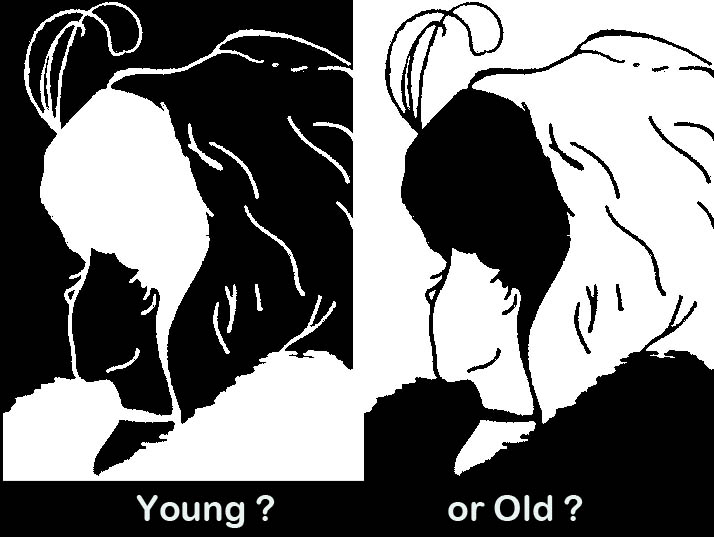
young-woman-old-woman-illusionAubrey de Grey views aging as a disease, or perhaps a collection of diseases, to be treated, cured, and healed.  His SENS project lists seven causes of aging, and presents seven ways to rejuvenate the body – each named ‘something’-SENS of course.  All seven are cellular, intracellular or extracellular causes. Surely aging is not so simple, or is it? Other views range from hormonal problems (excesses or deficits), to oxidation (based on calories consumed), to lack of exercise, to free radical damage, to nutrition and toxin issues, and more…

Each definition, each view of aging, results in ideas and products that claim to fight or reverse the effects of aging.

But there’s an important issue often ignored by theorists and marketers.

Unhealthiness Continue reading

Facebooktwitterredditpinterestlinkedinmail
Posted in Uncategorized | Comments Off on Healthicine: What is Aging?