You might think there are only two types of medicines – conventional medicines and alternative medicines. There are many different ways to view medicines, and when we take different viewpoints, we can learn more. The differences between conventional and alternative medicines is a very weak distinction, so weak that it is not recognized by the US FDA – the official body for approval of medicines.
How should we view different classes of medicines? In this post, we view different medicines according to their effects on healthiness. Some medicines have a positive effect on healthiness, some have a very negative effect on healthiness and many are in-between. In this diagram, medicines are arranged from the least healthy on the left, to the healthiest on the right. In each case there is some overlap – sometimes this overlap can be very wide.
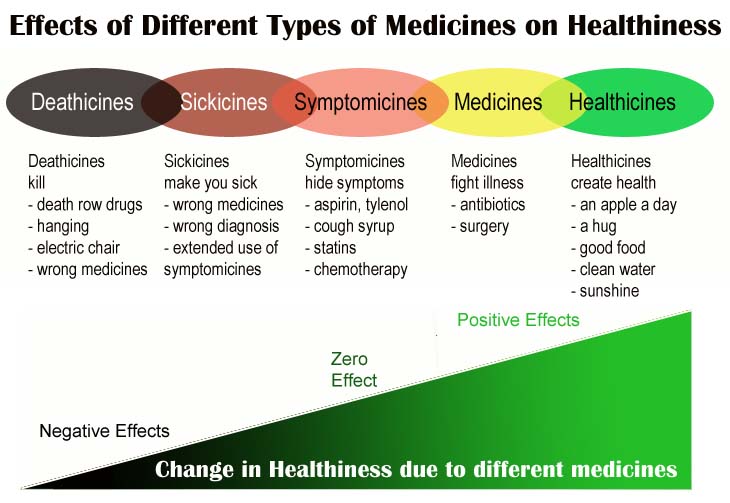
Deathicines kill. We kill with lethal injections of medicine, treatments with hanging, firing squads, and electric chairs. I think we do this, hoping that we are making our society ‘healthier’, or ‘well’. We kill after we give up on our ability to cure with medicines, or to health with healthicines.
Deathicines/Sickicines are medicines that kill when they try to cure. The Institute of Medicine report, in 2000, estimated that between 44,000 and 98,000 preventable deaths were caused by medical errors. It’s very difficult to count or estimate the number of deaths by medical deathicines. It’s easy, intentionally or simply in error, to attribute a death to an illness – rather than document a death due to a medicine. We don’t intend for medicines to kill – except on death row or in murder movies. But they kill.
Sickicines are medicines that make you sick. They fail to cure, fail to make you well, or fail in “making you healthier”. One group of sickicines are simply “wrong medicines”. You might get the wrong medicine in many different situations. A mistake in your bathroom, taking the wrong pills when you are tired or confused. A mistake in the hospital, where a staff member gives the right medicine to the wrong patient. A diagnostic mistake in the doctor’s office, resulting a prescription for a wrong medicine. A mistake in design and testing of medicines, resulting in the sale of a product that sickens more than it cures.
Many ‘subscription medications’ – symptomicines, are also sickicines. Sickicines are hard to count, although there are some statistics. A report by the Institute of Medicine in the USA estimated over one million injuries due to medical errors – one group of sickicines. Most prescription medicines sold are symptomicines, having potential to become sickicines.
Symptomicines hide symptoms. Symptomicines hide negative sensations, those that make us uncomfortable or unhappy. Symptomicines do not cure, they only affect symptoms.
If the symptoms are a result of a minor illness, a symptomicine can help your body to heal. If the symptoms are a result of serious illness, symptomicines can hide the illness and allow it to grow. In an ongoing illness, the use of symptomicines must be paired with healthicines, because. symptomicines do not cure. They are often ‘subscription medicines’, and the patient is advised to learn to ‘live with your disease’. Symptomicines are often prescribed when your doctor gives up on your illness, and often recommended in medical textbooks – when the medical textbook has no solution to the illness. Many of the top 100 best selling medicines of 2013 are symptomicines.
Symptomicines/Medicines – the overlap between symptomicines and medicines, contain symptomicines that can help to cure. A cold medicine doesn’t cure, but relief from symptoms helps you perform healthy activities – resulting in faster recovery.
Medicines fight illness and disease, so you can recover. The goal of medicine is to make you well – ‘not sick’. If you are not sick, you don’t need a medicine. Some medicines also fight symptoms, but often medicines create more symptoms, or side effects, because they are designed to fight life (unhealthy bacteria), not to help life.
Patent medicines don’t come from nature, they are man made. Medicines are often designed to ‘trick’ illness, to trick nature. Health is true and honest – you can’t ‘trick’ health. Most medicines are medicines all of the time. Antibiotics and prescription drugs don’t stop being medicines ‘depending on use’. They are medicines by design.
Medicines/Healthicines some medicines are also healthicines: “let food be thy medicine, and medicine be thy food” said Hippocrates. Vitamin C, or foods containing Vitamin C, are foods and healthicines – but when you have scurvy, they act as medicines.
Healthicines make you healthy and healthier. Healthicines come from nature, because we come from nature. Healthy foods, healthy exercise, healthy thoughts, and healthy communities. Healthicines fight and prevent disease by making you healthier. When you are sick, many healthicines can be medicines. When your diet is deficient, many healthicines – essential nutrients – can cure diseases that a patent medicine cannot touch.
Classes of Medicines
Medicines range from deathicines, causing death, to healthicines – causing health. The sequence, from deathicines to sickicines to symptomicines to medicines to healthicines is arranged by their effects on healthiness. Deathicines, sickicines and symptomicines generally have negative effects on healthiness, while symptomicines, medicines and healthicines have positive effects on healthiness.
When Hippocrates said “Let food be thy medicine, and medicine be thy food”, he was talking about symptomicines, medicines and mostly – healthicines.
Healthicines are the most effective medicines and the most effective preventatives. Medicines can be more powerful, but with this power comes more risk of damage.
Unintended Effects
Each class of medicine has intended effects – and also unintended effects. These effects can also be used to guide our choice of treatment.
Healthicines create healthiness, and as a result, they prevent and cure illness. The most effective way to prevent an illness is to improve health – and this can only be accomplished with healthicines.
Medicines kill illness, but unintended effects can range from mild decreases in healthiness to death. Medicines are powerful tools, but we must be careful to not overuse or misuse them. Medicines are dangerous to health.
Symptomicines dull symptoms and can allow illness to grow undetected. In short term illnesses, like a cold or influenza, symptomicines are very effective. In long term illnesses, symptomicines need to be paired with a search for the cure – which is usually healthicines. Symptomicines without a search for the cure, allow the illness and damage caused by the illness to grow.
Sickicines are entirely unintended. Sickicines are the result of medical errors, and we need to reduce them whenever possible.
Deathicines kill and as a result they often destroy the truth and abandon the search for health. We need to reduce or eliminate the use of deathicines to create healthier communities, societies, and countries.
Creation of
Healthicines are created by nature.
Symptomicines are created by discomfort, and by salesmen.
Medicines are created by searching for cures.
Sickicines are created by error.
Deathicines are created by ignorance and negligence.
Other classes of medicine
There are other ways to look at medicines, and other classifications of medicines that are outside of the above classification system. Here are a few examples of non-medicines, that are often called medicines.
Placebos
The name placebo comes from Latin, meaning ‘to please’. Placebos are given to please the patient. However, today there are two kinds of placebos.
- True placebos prescribed you your doctor are ‘intended to heal’, and in many cases – they work, although there is lots of confusion about why. Placebos are medicines by intent. The intention of the doctor is to make the patient healthier.
- Clinical placebos are administered in a medical study. They are designed to ‘not heal’ and are administered without intent to heal. They are not true placebos. They are not intended to please the patient, nor to heal the patient. False placebos are designed to test medicines in clinical studies, through a comparison with a ‘not medicine’.
Fake-icines
Fake-icines are things that pretend to be healthicines, or pretend to be medicines, but are actually neither. Think diet soda. It pretends to help you lose weight. It does not increase your healthiness. It does not fight your illness, even if your illness is obesity. And the latest scientific research confirms – it actually makes you fatter, and less healthy. Think ‘energy drinks’, that pretend to give you energy. They actually create imbalance, jangling your nerves with a burst of energetic feelings, which seldom lead to energetic activities. Then, the rebound effect leaves you tired and fuzzy headed, prompting you to take some more. The perfect addiction. Fake-icines might have some natural ingredients, like water, but they are not from nature, they are created by man. They are created to ‘sell more’.
Illegal-icines are healthicines, symptomicines, and medicines that are illegal. It is unfortunate that many medicines are illegal. Illogical that many natural symptomicines are illegal, and ridiculous that many healthicines are illegal. That’s the state of our laws of medicine today, but that’s complicated enough for a post of its own.
to your health, tracy
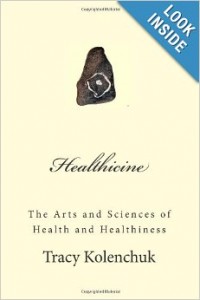
 Tracy is the author of Healthicine: The Arts and Sciences of Health and Healthiness, and Introduction to Healthicine: Theories of Health, Healthiness, Illness and Aging.