The cause is proven by a cure.
In 2016, I was working to update the book Healthicine, the Arts and Sciences of Health and Healthiness, which had been published several years before when I realized I could not find a useful definition of cure. I was distracted by cure – and hope to get back someday to the theories of healthicine.
Today, we have no recognized theory of cure, thus, we have no history of any theory of cure. We have no medical nor scientific definition disease, much less of cured for all diseases. As I became aware of this, in mid-2016, I embarked on a mission to define cure, cures, curing, and cured – to create this theory of cure.
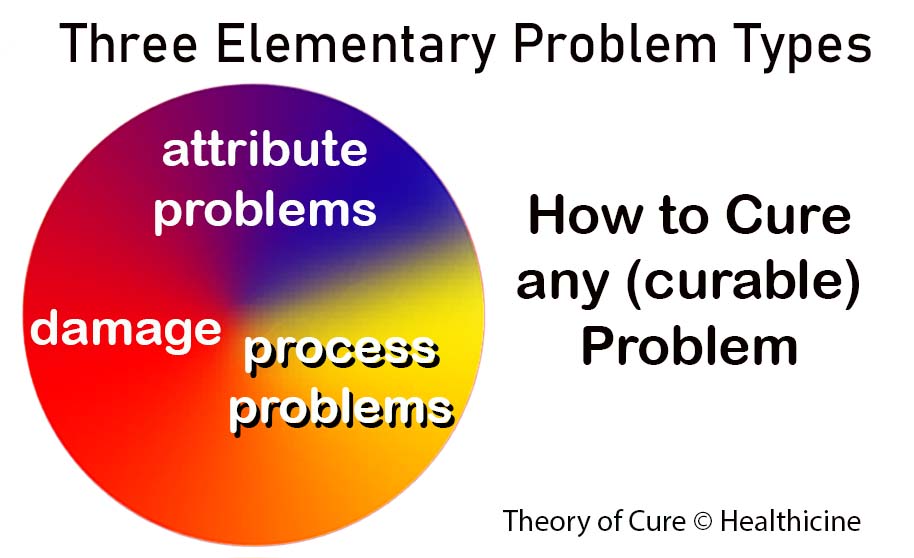
In, what is now almost 10 years of research into cure, I published a series of smaller and smaller books, aiming to get to the clearest possible definition of cure. TLDR? Here are the key points of the theory of cure:
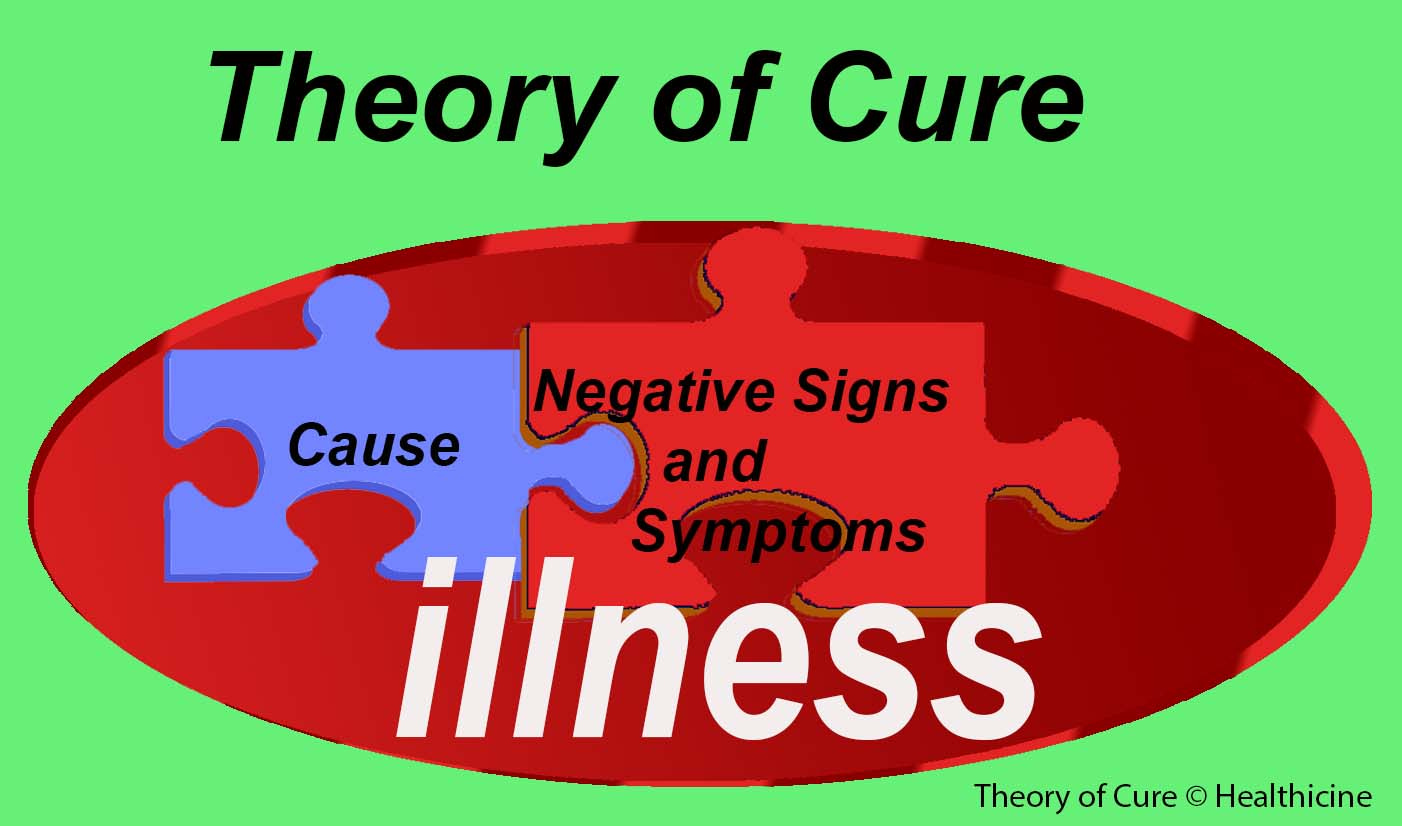
- An elementary illness has a single cause.
- The cure cause of a present illness is a cause.
- Therefore: an elementary cure addresses a single cause.
- The cure proves the cause.
- The cause of an illness element is in one of the six causal domains: diet, body, mind, spirits, communities, or environments.
- Illness is a judgement. Cured is a judgement. Judgements are about single cases, not statistics. Every case of cured is a story, an anecdote, not a statistic.
- Curing is intentionally addressing present causes of illness.
- Healing is unconsciously addressing present causes of illness. Most cures come from healing.
- Caring is when a community helps an ill individual with the causes and consequences of an illness. Caring sometimes cures, although the intent is not to cure. If the intent is to cure, it is curing.
In 2018, I published A Calculus of Curing and also published a colour edition under the name Cure, contains almost 300 pages in a rambling conversational mode, switching between discussions of medical theory, viewed by patients and practitioners. It is a blend of light hearted and serious looks into the concepts of cure, cures, curing, and cured. I wanted to distill the information into a much smaller book, and thus;
A more rigorous, scientific, theoretical book, of under 150 pages was published in January 2019 under the names The Elements of Cure and The Science of Cure.
In November 2019, I published a 27 page paper summary of the theory of cure, freely available on Academia.edu and Researchgate.net. These papers were updated as a result of further research and analysis on March 23, 2020.
This refinement process led to the publishing of the book A Theory of Cure, a more precise summary in just under 50 pages.
At each stage of this process, my understandings of cure, cures, curing, and cured were continually challenged often requiring significant changes to material that had been previously published.
After publishing A Theory of Cure, I started a process to create a one-page summary of the theory of cure. I wondered – is it possible? It turns out, no – not quite, or at least, not yet. This work also forced me to refine and redefine some concepts.
I have prepared a one-page summary of the elementary theory of cure, the theory of curing elements of illness. Illness and disease are complex. A second page is needed to expand the theory to cover compound, complex, and chronic diseases. This summary continues to evolve, but the foundation is quite clear and solid. You can find it here: A Summary of Cure
Collaborators?
My work to date has been entirely solo. I have a few supporters, but no real collaborators. Most people, on seeing my work assume it is about alternative medical practices, which is not true at all. The theory makes few references to conventional or alternative medical practices – these terms are political, not scientific. As a result, even when my work is viewed by alternative medical practitioners – they often come away baffled, having no definition of cure either.
I have attempted twice to publish papers in recognized medical journals. I sent the paper Elementary Steps Towards a Theory of Cure to the Journal of Medicine and Philosophy, April 12, 2021, with a simple response that no one had accepted the task of peer review. Apparently, I have no peers. I sent a second paper, A Theory of Cure, to BMJ: British Medical Journal, July 29, 2021. No response received. As a result, I have made both of these papers freely available on the Theory of Cure website.
In September 2020, I published COVID-19: From Causes to Cures, a preliminary look at COVID-19 cures. Within a few weeks, its publication was BLOCKED by Amazon, and to be honest, I lost interest. I have self-published, but there is no apparent interest by anyone else either.
In July 2021, I published a revised version of the book, under the title A NEW Theory of Cure. This book has been updated several times, approximately once a year as my ideas grew and tightened. I am currently working on a second edition.
Of course there is no “old theory of cure” that was generally accepted, so in the model of Alice in Wonderland,
“Mad Hatter: Would you like a little more tea?
Alice: Well, I haven’t had any yet, so I can’t very well take more.
March Hare: Ah, you mean you can’t very well take less.
Mad Hatter: Yes. You can always take more than nothing.”
We can have a “new theory of cure” even though we never had any old theory of cure.
Beyond the Framework
Work on the theory of cure has led me to explore and write about many other aspects of medicine – to create a larger stronger framework. Here are a few of many ideas encountered and explored.
Disease – there is no authoritative definition of disease in any current medical practice. There is little, if any active theoretical discussion of the concepts medicine.
In the theory of cure, I defined disease using the World Health Organization’s International Classification’s unstated definition: a disease is any condition that might be diagnosed or treated by a medical professional, ranging from cuts, bruises, and burns to infectious and chronic diseases. In the theory of cure, I avoid the word disease and instead:
In the theory of cure, we use the word “curable illness.” Disease might be curable or not. A curable illness is curable by definition.
Cause and Causal Domains: – there are many historical, but no currently accepted comprehensive concepts of causes of illness or disease.
In the theory of cure there are six recognized domains of cause of healthiness and of illness: diet, body, mind, spirits, communities, and environments. An elementary illness’s present cause might be found in any one of these domains. The illness is cured when the present cause has been successfully addressed – and the present cause has been successfully addressed when the illness is cured. There can be many different ways to address any present cause of a case of illness.
Illness, Disease, Sickness – are sometimes distinguished in modern medicine, and this concept is taken farther in the theory of cure. The modern medical view is, well – medical, as in a well known quote “A patient goes to the doctor with an illness, and goes home with a disease.”
In the theory of cure, an illness is the individual’s perception, a disease is the doctor’s perception, and a cure is a perception of a community of the individual. All three perceptions are independent and can be aligned or not. As a result, cure has three different perceptions as well.
Healing, Caring, and Curing – are poorly distinguished in conventional and alternative medical practices. As a result of having the theory of cure as a foundation, I was able to define and explore the concepts of healing, caring and curing in a comprehensive manner. I published the first result in a paper on Academia.edu and Researchgate.net and then included the concepts into an updated version of the book A New Theory of Cure.
Collaboration
If you are interested in working with me to further our studies of the theory of cure, drop me a note: tracychess@hotmail.com
to your health, tracy
Founder: Healthicine, the Arts and Sciences of Health and Healthiness
Author: A New Theory of Cure